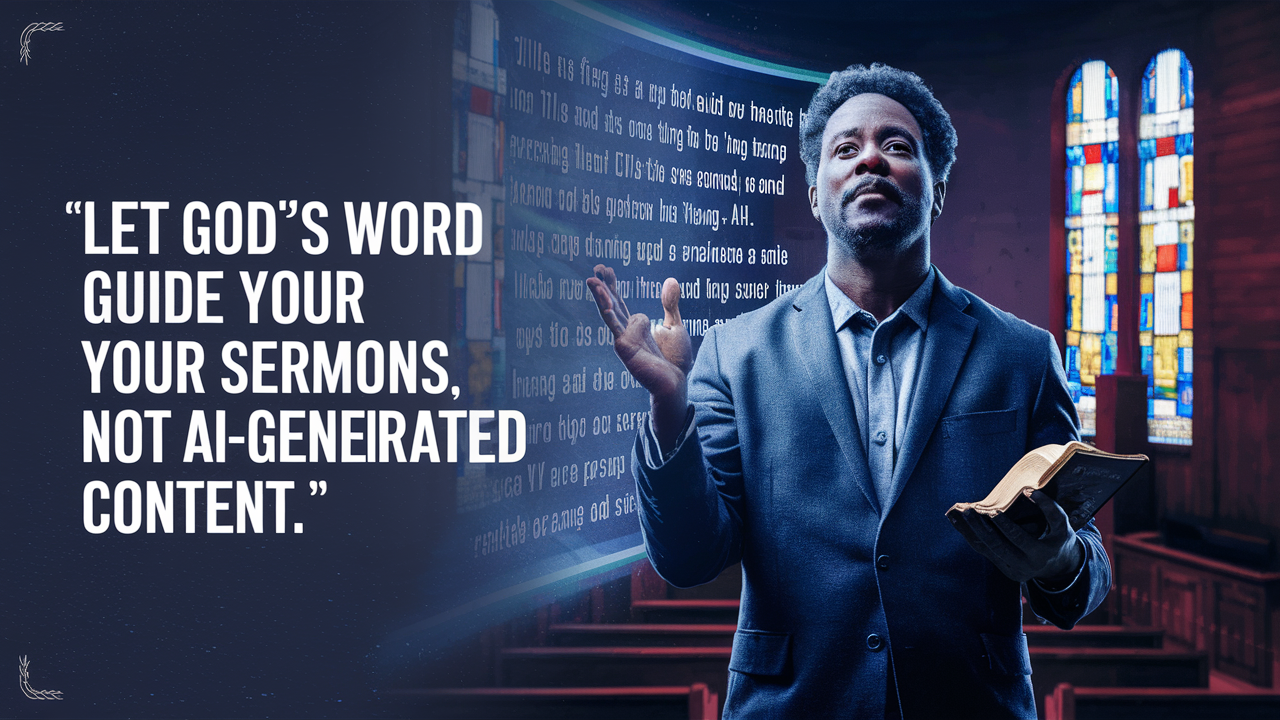
I believe AI will fundamentally transform how millions of Christians engage with Scripture—but only if we build it right. As a software developer, church small group leader, and father deeply invested in both technology and faith, I've watched the explosion of AI tools claiming to help Christians study the Bible. The problem? Most of them miss the mark entirely.
Understanding what AI is and how it works is crucial for Christians navigating this technological revolution. Recent data from the American Bible Society's 2025 State of the Bible report shows that just over half of all Americans (51%) wish they read the Bible more—with that desire even stronger (80%) among those open to the Bible as a source of spiritual wisdom. Meanwhile, AI Bible study apps have surged in popularity, with platforms like CrossTalk (formerly Bible Chat) serving over 25 million Christians worldwide. Yet many of these tools either oversimplify Scripture or lack theological accuracy—and that's dangerous.
That's why I built FaithGPT (www.faithgpt.io).
In this comprehensive guide, I'll walk you through exactly what FaithGPT is, why it's different from other Christian AI tools, how it works, and—most importantly—how you can use it to deepen your relationship with God without replacing the Holy Spirit's guidance or your church community.
Understanding the Need: Why I Built FaithGPT

The Personal Journey Behind FaithGPT
Let me be transparent with you. I didn't build FaithGPT because I thought the Church needed more technology. I built it because I saw a gap between where AI technology was heading and how it could genuinely serve believers seeking to understand God's Word better. I also wanted a tool like FaithGPT to be built by a Christian not someone trying to capitalize on the growing Christian market-share.
As a small group leader, I witnessed firsthand the struggles people face:
- New believers drowning in unfamiliar biblical language and historical context
- Busy parents wanting to study Scripture but lacking time for extensive research
- Seasoned Christians seeking deeper theological insights without seminary-level resources
- Youth disengaging from traditional Bible study methods
The existing solutions fell into two camps: traditional Bible software that required steep learning curves, or AI chatbots that provided theologically questionable responses with no accountability.
"The fear of the Lord is the beginning of knowledge, but fools despise wisdom and instruction." - Proverbs 1:7
I needed to build something that honored Scripture while leveraging AI's incredible ability to make information accessible.
The Problem with Current AI Bible Tools
Before we dive into what FaithGPT offers, let's address the elephant in the digital room: most AI Bible tools have serious limitations.
Common Issues I've Observed:
- Theological Inaccuracy - Many AI tools generate responses without proper biblical grounding, leading to heretical or confusing answers
- Lack of Context - Verse cherry-picking without historical, cultural, or literary context
- Replacement Mentality - Tools positioning themselves as replacements for pastors, community, or the Holy Spirit
- Data Privacy Concerns - Your personal faith questions being used to train commercial AI models
- Oversimplification - Reducing complex theological concepts to surface-level soundbites
The question of whether Christians should use AI chatbots is increasingly important as these tools become more prevalent. I built FaithGPT specifically to address these problems.
What Exactly Is FaithGPT?
The Core Mission
FaithGPT is a Bible AI companion designed to help you understand Scripture better. It's not a replacement for your pastor, your church community, or your personal relationship with God. It's a digital assistant that makes biblical knowledge more accessible while maintaining theological integrity.
Think of FaithGPT as having a knowledgeable Christian friend available 24/7 who can help you:
- Understand difficult passages in context
- Learn about biblical characters and their stories
- Find relevant verses for specific life situations
- Study the original Greek and Hebrew meanings
- Trace theological themes throughout Scripture
The Technology Behind FaithGPT

At its core, FaithGPT leverages multiple state-of-the-art AI models from leading providers to ensure you get the best possible responses for your Bible study needs. Here's what makes our approach different: |
"All Scripture is God-breathed and is useful for teaching, rebuking, correcting and training in righteousness." - 2 Timothy 3:16
Our technology serves Scripture—not the other way around.


Key Features That Set FaithGPT Apart
FaithGPT is more than just an AI chatbot—it's a comprehensive suite of tools designed specifically for Christian study, devotion, and creative ministry. Here are the core features:
1. Bible App with AI Insights
The most revolutionary feature in FaithGPT: a complete Bible reading experience with AI-powered insights integrated directly into every verse. This isn't a separate AI tool you switch to—it's AI assistance woven into your Bible reading.
Key Capabilities:
- Multiple Translations: Access KJV, ASV, YLT (Other major translations like ESV, NIV, NASB, KJV, and others coming soon)
- Instant AI Insights: Tap any verse to get immediate theological analysis, historical context, and practical applications
- Seamless Reading: Continue reading naturally while having an AI theologian at your fingertips
- Highlighting & Bookmarking: Mark important passages with AI-assisted cross-references
- Smart Search: Find verses by concept, not just keywords
Why This Matters: Most Bible apps make you leave the reading experience to search commentaries or look up cross-references. FaithGPT's Bible App brings AI insights directly into the flow of reading—making deep understanding accessible in the moment.
2. Image Studio - AI Image Generation for Ministry
Create professional-quality images for ministry needs without design skills or expensive software.
Features:
- Faith-Focused Templates: Pre-designed templates like "Biblical Time Period Selfie," sermon graphics, prayer cards, event posters
- Template-Guided Creation: Upload a photo and let templates guide you—no prompt engineering required
- Community Gallery: Browse and get inspired by images created by other churches and ministry leaders
- Collections Management: Organize generated images into themed collections
- Public/Private Sharing: Share creations with the community or keep them private
Use Cases:
- Social media content featuring congregation in biblical settings
- Professional sermon series graphics
- Custom prayer cards for events
- VBS promotional materials
- Church bulletin covers
3. AI Chat with Biblical Characters

One of FaithGPT's most unique features is the ability to engage in conversations with biblical figures including Jesus, Moses, David, Paul, Mary, Peter, and John. Let me be crystal clear: these are not actual conversations with these figures. They're AI simulations based on:
- Scriptural records of their teachings and actions
- Historical context from biblical scholarship
- Theological accuracy reviewed by Christian leaders
Why This Feature Matters:
When studying the Apostle Paul's letters, for example, you can "ask Paul" about the context behind specific passages. The AI draws from:
- Paul's entire biblical narrative
- The cultural setting of the Roman Empire
- Greek language nuances in his original writings
- Theological themes consistent across his epistles
This creates an immersive learning experience that helps you remember and understand Scripture more deeply than passive reading alone.
Example Conversation:
User: "Paul, why did you write so strongly against the Judaizers in Galatians?"
FaithGPT (as Paul): "Brother, I witnessed firsthand how the false teaching that Gentiles must follow Jewish law was destroying the freedom we have in Christ. As I wrote in Galatians 5:1, 'It is for freedom that Christ has set us free.' The Judaizers were adding requirements to the gospel—essentially saying Christ's sacrifice wasn't sufficient. This struck at the very heart of grace..."
4. Scripture Insights - Deep Biblical Analysis
Get AI-powered theological analysis and explanations for any passage.
Features:
- Theological Analysis: Understand complex passages with AI-generated insights grounded in sound theology
- Cross-References: Discover related passages throughout Scripture
- Historical Context: Learn about the cultural, historical, and archaeological background
- Practical Applications: Get actionable ways to apply Scripture to modern life
- Save & Organize: Keep your insights for future reference
Perfect For:
- Sermon preparation and teaching
- Small group discussion prep
- Personal Bible study deepening
- Understanding difficult passages
5. Verse Finder - Semantic Scripture Search
Find verses by concept, not just keywords. Unlike traditional Bible search that requires exact word matches, Verse Finder uses AI to understand what you mean.
How It Works:
- Search by situation: "verses about fear during hard times"
- Search by concept: "passages showing God's faithfulness"
- Search by theme: "scriptures on prayer and persistence"
- AI finds semantically relevant verses you might miss with keyword search
Why It's Powerful: Traditional Bible search only finds exact word matches. If you search "fear," you miss verses about "anxiety" or "worry." Verse Finder understands the concept and finds all relevant passages.
6. Prayer Journal - AI-Organized Prayer Tracking

Track, organize, and celebrate answered prayers with AI assistance.
Features:
- Prayer Request Management: Add and categorize prayer requests
- AI-Assisted Organization: Automatic tagging and categorization
- Answered Prayer Tracking: Celebrate God's faithfulness with timeline views
- Prayer Prompts: Get AI-generated prayer prompts when you need inspiration
- Group Prayers: Share prayer requests with small groups or church leadership
Benefits:
- Never lose track of prayer requests
- See patterns of God's faithfulness over time
- Share burden-bearing with your community
- Grow in your prayer life with structured tracking
7. Bible Study Plans - Guided Scripture Reading
Curated reading plans with progress tracking to help you engage Scripture consistently.
Features:
- Multiple Plan Types: Topical studies (God's Character, Prayer, Faith), chronological reading, book studies
- Progress Tracking: Visual tracking of completion with streak management
- Customizable Pace: Adjust to your schedule and goals
- Notes & Highlights: Take notes and highlight verses as you go
- AI Insights Integration: Get instant AI insights on passages within your plan
Perfect For:
- Developing consistent Bible reading habits
- Structured topical study
- Church-wide reading initiatives
- Personal spiritual growth goals
8. Multiple AI Tools
Unlike other platforms that offer basic chat functionality, FaithGPT provides specialized tools designed specifically for Christian study and ministry:
Scripture Research Tools - Find exactly what you're looking for in God's Word, whether you remember the exact reference or just the theme you're exploring.
- Discover verses by topic, not just keywords
- Compare how different translations handle key passages
- Get instant access to any Bible verse or chapter
Study Enhancement Tools - Deepen your understanding with tools that provide context, analysis, and practical application.
- Uncover the historical and cultural background of passages
- Generate personalized devotionals for any theme or life situation
- Access theological insights that connect Scripture to daily life
Creative Ministry Tools - Bring your faith to life with visual and interactive content for personal study or ministry use.
- Create meaningful images for social media, sermons, or personal reflection
- Generate organized content for teaching and sharing
- Build visual aids that help communicate biblical truths
Personal Growth Tools - Track your spiritual journey and maintain consistency in your walk with God.
- Remember important insights and prayer requests over time
- Access current information to connect faith with real-world events
- Organize your thoughts and studies for long-term spiritual growth
This comprehensive toolkit means you have everything needed for deep, meaningful Bible study - from quick verse lookups to sermon preparation to creative ministry content.
9. Conversation Management System

Bible study isn't about isolated questions—it's about building understanding over time. That's why FaithGPT includes robust conversation management:
Key Features:
- Conversation Threading - All messages maintain context from your previous questions
- Bookmarking - Save important conversations for future reference
- Project Organization - Group related studies together (e.g., "Romans Study" or "Prayer Life")
- Sharing - Share insightful conversations with your small group or pastor
- Export Options - Download conversations in multiple formats for offline study
I built this because my own Bible study involves returning to questions over weeks or months. FaithGPT remembers your journey.
How FaithGPT Maintains Theological Integrity
The Guardrails We've Built In
This is perhaps the most important section of this entire article. AI can be incredibly helpful—or incredibly misleading. Here's how we maintain theological accuracy:
1. Scriptural Grounding Every response is designed to reference actual biblical text. We don't allow the AI to "make things up" about Scripture. If the Bible doesn't say it, FaithGPT won't claim it does.
2. Multiple Translation Support FaithGPT draws from multiple respected Bible translations (ESV, NIV, NASB, KJV, etc.) to provide nuanced understanding without preferring one translation's theological bias over others.
3. Historical Context Integration Responses include relevant historical, cultural, and archaeological context drawn from biblical scholarship—not just modern interpretations disconnected from the original audience.
4. Theological Balance We've designed our AI training to represent broad Christian orthodoxy rather than specific denominational distinctives. This means we maintain positions on core doctrines (Trinity, divinity of Christ, salvation by grace) while acknowledging Christian diversity on secondary issues (baptism modes, church governance, end times).
5. Humility Built In FaithGPT is programmed to acknowledge when questions touch on interpretive debates among Christians or when a topic requires pastoral counsel rather than an AI response.
"Do your best to present yourself to God as one approved, a worker who does not need to be ashamed and who correctly handles the word of truth." - 2 Timothy 2:15
What FaithGPT Won't Do
Clear Boundaries:
- Won't Replace Pastoral Counsel - For personal crises, marriage issues, or major life decisions, we direct users to speak with trusted Christian leaders
- Won't Make Prophetic Claims - FaithGPT never claims to speak for God or provide "new revelation"
- Won't Provide Medical/Legal Advice - Even when the Bible touches on these topics, we maintain appropriate boundaries
- Won't Engage in Theological Arguments - The goal is understanding, not winning debates
- Won't Store Personal Prayer Requests - Your intimate conversations with God aren't training data
These boundaries ensure FaithGPT remains a tool—not a spiritual authority.
Test Your AI & Bible Study Knowledge
Question 1/5
What percentage of Americans wish they read the Bible more?
Your weekly faith & AI brief.
Scripture, reflection, and the AI news that matters for Christians. Free, every week.
Read this week’s issueHow to Use FaithGPT Effectively

Getting Started: Your First Session
When you first access FaithGPT, here's how to maximize your experience:
Step 1: Choose Your Study Mode
Are you:
- Doing a quick devotional? Use faithgpt-mini
- Preparing a lesson? Use faithgpt-max or GPT-4
- Wrestling with a deep theological question? Try Claude Sonnet
Step 2: Frame Your Question Well
Instead of: "What does this verse mean?"
Try: "Can you explain Romans 8:28 in its historical context and how it connects to the preceding verses about suffering?"
The more specific your question, the more helpful the response.
Step 3: Engage in Dialogue
Don't treat FaithGPT like a search engine. It's designed for conversation:
- Ask follow-up questions
- Request clarification on complex points
- Challenge the response if something seems off
- Ask for additional Scripture references
Step 4: Verify with Scripture
Always have your Bible open. FaithGPT is most valuable when used alongside actual Bible reading, not as a replacement for it.
Best Practices for Different Study Types
Daily Devotional Study:
- Start with a passage you're reading
- Ask FaithGPT for a brief context summary
- Request 2-3 application points
- End with a biblical prayer related to the passage
Sermon Preparation:
- Use faithgpt-max for deep exegesis
- Ask for the passage's structure and main themes
- Request cross-references and parallel passages
- Inquire about common misinterpretations to avoid
- Get illustration ideas rooted in biblical narrative
Small Group Study:
- Prepare discussion questions using FaithGPT
- Anticipate likely questions from group members
- Organize conversations by study topic for easy reference
- Export key insights to share with participants
Topical Research:
- Ask FaithGPT to map a theme throughout Scripture
- Request a chronological or canonical progression
- Compare how different biblical authors address the topic
- Synthesize the biblical teaching on the subject
Common Questions to Ask FaithGPT
For New Believers:
- "Can you give me an overview of the Gospel of John?"
- "What's the significance of baptism in the New Testament?"
- "How do I start reading the Bible as a new Christian?"
- "What are the core beliefs of Christianity?"
For Growing Christians:
- "Trace the theme of covenant throughout the Old Testament"
- "How does Paul's understanding of justification develop across his letters?"
- "What's the relationship between faith and works in James 2?"
- "Explain the cultural context of Jesus's parables"
For Ministry Leaders:
- "Compare the leadership qualities in 1 Timothy 3 with Titus 1"
- "What theological framework does Hebrews use to present Christ's superiority?"
- "How did the early church handle theological disputes in Acts 15?"
- "Outline the structure of Isaiah and its messianic prophecies"
When Should You Use AI for Bible Study?
Quick reference: When is AI appropriate for your church?
| Use Case | Difficulty | AI Role | Approved? | Notes |
|---|---|---|---|---|
| Sermon Research & Prep | Easy | Assist | ✓ | 4-6 hrs/week saved | 150-200% ROI | Organize research, find historical context, generate outlines Saves 4-6 hrs Year 1 ROI: 150-200% |
| Email Campaigns | Easy | Assist | ✓ | 25-40% better open rates | Immediate ROI | Draft emails, optimize subject lines, schedule sending Year 1 ROI: Immediate |
| Volunteer Scheduling | Easy | Automate | ✓ | 8-12 hrs/week saved | 110-150% ROI annually | Match volunteers to tasks, optimize scheduling Saves 8-12 hrs Year 1 ROI: 110-150% |
| Pastoral Counseling | Hard | Never | ✗ | ❌ Critical Boundary | AI cannot provide genuine spiritual care, lacks pastoral relationship | 0% churches recommend for counseling |
| Giving Analysis | Medium | Assist | ✓ | 15-25% revenue increase | 300-500% ROI Year 1 | Analyze patterns, identify trends (with privacy safeguards) Year 1 ROI: 300-500% |
| Scripture Teaching | Hard | Assist | ✓ | Supplement only | 100% churches affirm human-led teaching primacy | AI provides cross-references, historical context |
| Live Translation (Services) | Medium | Assist | ✓ | Serve multilingual congregations | Cost: $80-400/month | Real-time transcription in 100+ languages |
| Spiritual Direction | Hard | Never | ✗ | ❌ Critical Boundary | Requires human discernment, pastoral authority, genuine relationship | SBC, UMC, LCMS all prohibit |
| Graphic Design & Video | Easy | Automate | ✓ | Free tier available | 0 cost to experiment | Create graphics, social media, promotional materials |
| Administrative Automation | Easy | Automate | ✓ | 5-10 hrs/week saved | Low/no cost | Calendar, emails, data entry, scheduling reminders Saves 5-10 hrs |
Automate
AI fully handles the task with minimal oversight
Assist
AI helps humans work better, humans make final decisions
Never
AI cannot replace human judgment, relationship, or authority
⚠ Critical Boundaries:
- • Never replace human pastors with AI counselors
- • Always maintain human oversight of AI decisions
- • Disclose when AI is used in any church communication
- • Protect member privacy in all AI applications
- • Remember: AI serves relationships, never replaces them
FaithGPT vs. Other AI Bible Tools
The Competitive Landscape
The Christian AI space has exploded recently. Let me give you an honest comparison of how FaithGPT stacks up against alternatives:
FaithGPT vs. Text With Jesus:
Text With Jesus focuses primarily on emotional connection and devotional experiences with biblical figures. Launched in July 2023, it allows users to "text" with over 30 Bible characters including Jesus, Mary, the apostles, and Old Testament prophets. The app uses ChatGPT and costs $2.99/month for premium features.
FaithGPT's Difference:
- Multiple AI models for different study depths (not just ChatGPT)
- Project management for sustained study
- Emphasis on theological accuracy over emotional experience
- Built for both individual and ministry use
FaithGPT vs. Bible.ai:
Bible.ai is a personal Christian AI designed to grow and learn with you as you explore scripture and engage in conversations about faith. It offers Bible reading tools, customized study plans, detailed commentary, cross-references, and Greek/Hebrew word studies.
FaithGPT's Difference:
- Conversation with multiple biblical characters, not just general Bible questions
- Export and sharing features for group study
- Specialized study tools beyond Q&A
- Image generation tools for ministry graphics and creative content
FaithGPT vs. Logos Bible Software:
Logos is the gold standard for professional Bible study software with decades of development and extensive library resources.
FaithGPT's Difference:
- No steep learning curve—conversational interface
- Affordable pricing compared to Logos subscription tiers
- AI-first design rather than AI added to existing tools
- Mobile-friendly chat-based experience
FaithGPT vs. CrossTalk (Bible Chat):
CrossTalk (formerly Bible Chat) is a Romanian startup that serves over 25 million Christians worldwide, making it the fastest-growing faith app globally. Launched by Laurențiu Bălașa and Marius Iordache, it raised $14 million in Series A funding and helps people ask questions about daily challenges—from relationship struggles to grief and PTSD—with answers grounded in the Bible.
FaithGPT's Difference:
- Biblical character conversations for immersive learning (not just Q&A format)
- Advanced conversation management and organization for sustained study
- Multiple cutting-edge AI models in one platform (you choose the model)
- Image generation and prayer journal features for holistic ministry support
Why Choose FaithGPT?
FaithGPT is ideal if you:
✓ Want both quick devotional help AND deep theological research in one tool
✓ Value having conversations with biblical characters to enhance learning
✓ Need comprehensive features like prayer journaling, image generation, and study plans
✓ Are a ministry leader wanting powerful AI tools for church communications and teaching
✓ Appreciate having choice in AI models rather than one-size-fits-all
✓ Want a modern, intuitive interface that's accessible for all ages
✓ Value data privacy and clear theological boundaries
Consider alternatives if you:
- Already invested heavily in Logos and want to maximize that ecosystem
- Prefer ultra-simple interfaces with minimal features
- Only need basic verse lookup without conversation
- Want an app focused exclusively on devotional experience over study
The Theology of Using AI for Bible Study
A Biblical Framework for Technology
Let me address the theological elephant in the room: Should Christians even use AI for Bible study?
This is a valid question that deserves serious consideration. I've written extensively about an AI ethics framework from a Christian perspective that addresses these concerns. Here's my perspective as both a technologist and a believer:
Technology as Stewardship
In Genesis 1:28, God commands humanity to "fill the earth and subdue it." This includes using our God-given creativity and intelligence to develop tools that serve human flourishing—including spiritual growth.
The printing press revolutionized Bible access. Radio and television expanded gospel reach. Online Bibles made Scripture searchable. AI is the next chapter in this story of technology serving God's Word.
The Question Isn't "Should We?" but "How Should We?"
Like any tool, AI can be used wisely or foolishly. Consider:
- A hammer can build homes or cause harm
- Fire can warm families or destroy forests
- The internet can spread gospel truth or destructive lies
AI itself is morally neutral. Our use of it matters.
"So whether you eat or drink or whatever you do, do it all for the glory of God." - 1 Corinthians 10:31
AI's Limitations in Spiritual Matters
Let me be absolutely clear about what AI cannot do:
1. AI Cannot Discern Spiritually
"The person without the Spirit does not accept the things that come from the Spirit of God but considers them foolishness, and cannot understand them because they are discerned spiritually." - 1 Corinthians 2:14
AI lacks spiritual discernment. It can provide information about Scripture, but it cannot experience the transforming power of God's Word or the illumination of the Holy Spirit.
2. AI Cannot Replace Community
Hebrews 10:24-25 calls us to "not neglect meeting together" and to "encourage one another." AI can help you prepare for community, but it cannot replace face-to-face fellowship.
3. AI Cannot Substitute for Prayer
While FaithGPT can help you understand biblical models of prayer, it cannot pray for you or with you in the spiritual sense. Prayer is communion with a living God—something no machine can replicate.
4. AI Cannot Provide Pastoral Care
When you're walking through grief, wrestling with sin, or facing major decisions, you need human pastoral care grounded in relationship and Spirit-led wisdom. FaithGPT will always direct you to seek such care when appropriate.
How AI Complements Biblical Disciplines
Used rightly, AI tools like FaithGPT can enhance traditional spiritual disciplines:
Bible Reading: AI helps you understand difficult passages so you can read Scripture with greater comprehension and joy.
Meditation: By providing context and cross-references, AI gives you richer material to meditate on throughout your day.
Memorization: Understanding verse meaning and context improves memory retention and recall.
Teaching: AI assists in lesson preparation, allowing teachers to spend more time on application and less on research.
Evangelism: Better biblical knowledge equips you to share the gospel more effectively and answer questions with confidence.
Think of FaithGPT as a digital concordance, commentary, and study Bible rolled into one—tools Christians have used for centuries, now powered by modern technology.
Real-World Use Cases and Testimonials
How People Are Using FaithGPT
Case Study #1: The Busy Parent
Sarah, a mother of three young children, struggled to find time for deep Bible study.
"Before FaithGPT, my Bible reading was sporadic and surface-level. I'd read a chapter while the kids ate breakfast but never had time to really understand what I was reading. Now, I can quickly ask FaithGPT questions during those brief moments—'What's the context here?' or 'How does this connect to the gospel?'—and actually understand what I'm reading. It's transformed my devotional life."
Case Study #2: The Small Group Leader
Marcus leads a men's Bible study at his church and needed help preparing weekly discussions.
"Preparing for small group used to take me 3-4 hours every week—reading commentaries, researching context, thinking through discussion questions. With FaithGPT, I can have a conversation about the passage, quickly understand the key themes, and generate thoughtful questions in about 45 minutes. That gives me more time to pray for my guys and reach out to them personally during the week."
Case Study #3: The Skeptical Seeker
James wasn't raised in church but started exploring Christianity in his 30s.
"I had so many questions about the Bible but felt stupid asking them in church. FaithGPT gave me a safe space to ask anything—even questions that might sound dumb or skeptical. Being able to 'talk with Jesus' about why he said certain things helped me understand his teachings in a way that reading alone never did. I became a Christian six months ago, and FaithGPT played a real role in that journey."
Case Study #4: The Seminary Student
Rachel is pursuing her M.Div. and uses FaithGPT alongside traditional academic resources.
"I don't use FaithGPT to replace my textbooks or professors—that would be academic dishonesty and just bad scholarship. But I use it as a sounding board for synthesizing ideas, getting quick language clarifications, and exploring connections between concepts before I dig into the heavy research. It's like having a study partner available 24/7."
What Users Appreciate Most
From feedback and usage patterns, here's what resonates most:
Top 5 Most-Valued Features:
- Speed of Access - Getting answers immediately rather than spending hours searching commentaries
- Conversational Feel - Being able to ask follow-up questions naturally
- Biblical Character Chats - Making biblical figures feel more "real" and relatable
- Context Explanations - Understanding the why behind passages, not just the what
- No Judgment - Asking questions without fear of seeming ignorant
Privacy, Security, and Data Ethics
How We Handle Your Data
In an era where data is currency, it's crucial to understand how Christian AI platforms handle your personal information. Here's FaithGPT's approach:
Data Collection:
- What We Collect: Conversation history, usage patterns, account information
- What We DON'T Collect: Personal prayer content marked private, sensitive pastoral counseling discussions, financial information beyond basic subscription data
Data Usage:
- Model Improvement: Anonymous, aggregated data helps improve response quality
- Never Sold: We never sell user data to third parties or advertisers
- No Commercial Training: Your conversations aren't used to train commercial AI models outside FaithGPT
Security Measures:
- Encryption: All data encrypted in transit and at rest
- Secure Authentication: Industry-standard auth protocols
- Regular Audits: Ongoing security assessments and updates
- GDPR Compliant: Respecting international privacy standards
User Control:
- Delete Anytime: Users can delete conversations or entire accounts
- Export Your Data: Download all your conversations before leaving
- Privacy Settings: Control visibility of your content and conversations
"Above all else, guard your heart, for everything you do flows from it." - Proverbs 4:23
Your spiritual journey is personal. We treat it that way.
Ethical AI Development
Beyond just privacy, FaithGPT is committed to ethical AI development:
Transparency: We're open about our AI's capabilities and limitations
Accountability: We welcome feedback from pastors, theologians, and users about theological accuracy
Continuous Improvement: Regular updates based on user feedback and theological review
No Manipulation: We don't use addictive design patterns or manipulate users emotionally for engagement
Fair Pricing: Affordable subscription model that doesn't exploit people's spiritual needs
Getting Started with FaithGPT Today
Pricing and Plans
Free Tier ($0):
- 5 credits to get started
- Access to core AI features
- Bible reading and search
- Manual prayer journaling
- For You devotionals (viewing)
- Bible Study Plans
- Bookmarks, highlights, and notes
- Perfect for trying out the platform
Weekly Plan ($7.99/week):
- 225 credits per week
- Access to all AI models
- AI-powered daily devotionals
- Advanced scripture insights
- Prayer journal with AI assistance
- Priority support
Monthly Plan ($19.99/month):
- 1,200 credits per month
- All Weekly features
- Best value for regular users
Annual Plan ($199.99/year):
- 14,400 credits per year
- All Monthly features
- Save 17% compared to monthly
How to Sign Up
Step-by-Step:
- Visit FaithGPT.io - Navigate to www.faithgpt.io
- Create an Account - Sign up with email or Google authentication
- Choose Your Plan - Start with free tier or jump into Premium
- Start Your First Chat - Try asking a question about a passage you're currently studying
- Explore Features - Try the Bible App, Image Studio, Prayer Journal, and other tools
No credit card required for free tier. Cancel anytime.
Resources for New Users
Help Center: Comprehensive guides and tutorials at faithgpt.io/help
Video Tutorials: Step-by-step walkthroughs for common features
Community Forum: Connect with other FaithGPT users, share insights, and ask questions
Blog: Articles on Bible study tips, AI and faith, and platform updates at faithgpt.io/blog
Support: Email support at hello@faithgpt.io or in-app chat
The Future of FaithGPT
What's Coming Next
I'm constantly working to improve FaithGPT based on user feedback and technological advances. Here's what's on the development roadmap:
Now available and coming next:
Mobile Apps:
- Native iPhone app: FaithGPT: Bible AI Companion
- Android app and deeper offline workflows are still on the roadmap
- Push notifications for daily devotionals and prayer reminders
Enhanced Study Plans:
- AI-generated personalized study paths
- Progress tracking and accountability features
- Integration with church sermon series
Improved Biblical Character Interactions:
- More characters from Scripture
- Deeper historical accuracy
- Voice interaction capabilities
Integration with Bible Reading Plans:
- Sync with popular Bible reading apps
- Auto-contextualize questions based on your current reading
- Community reading challenges
Advanced Theological Tools:
- Original language study enhancements
- Detailed word studies with morphology
- Comparative translation analysis
- Theological theme mapping across Scripture
Community Features:
- Shared study rooms for small groups
- Question and answer forums moderated by pastors
- Collaborative annotation of conversations
The Vision
My long-term vision for FaithGPT is simple: to make deep, theologically sound Bible study accessible to every believer, regardless of their education level, financial resources, or time constraints.
I want:
- The single parent working two jobs to understand Scripture deeply during their lunch break
- The teenager wrestling with faith questions to get solid biblical answers without judgment
- The pastor in a rural area without seminary access to have world-class study tools
- The new believer from another faith background to discover the richness of God's Word
- The lifelong Christian to find fresh insights after decades of Bible reading
Technology should serve the Church—not the other way around. FaithGPT is my attempt to ensure that as AI transforms our world, it also serves to deepen our love for God's Word and understanding of His character.
Frequently Asked Questions (FAQs)
Is FaithGPT trying to replace pastors or church community?
Absolutely not. FaithGPT is a study tool, not a replacement for spiritual leadership or community. Think of it like a concordance or commentary—helpful for study but no substitute for pastoral care, accountability, and fellowship. We actively encourage users to engage with their local churches and seek pastoral counsel for important decisions.
How accurate are the biblical character conversations?
The biblical character feature uses AI to simulate conversations based strictly on what Scripture records about these individuals—their teachings, actions, cultural context, and historical setting. These are educational simulations designed to help you engage with biblical narratives more deeply. They are not claiming to be the actual person or to speak new revelation.
Can I trust the theological accuracy of FaithGPT's responses?
FaithGPT is designed with theological safeguards and trained on orthodox Christian teaching. However, like any Bible study tool (commentaries, study Bibles, etc.), it should be used alongside Scripture reading and verified with trusted Christian leaders. We represent broad Christian orthodoxy while acknowledging denominational differences on secondary issues.
What if FaithGPT gives me an answer that seems wrong?
Always verify with Scripture. If something seems off, you can:
- Ask FaithGPT to provide biblical references for its claims
- Consult your pastor or a trusted Christian leader
- Report the response to us for theological review
- Remember that AI can make mistakes—it's a tool, not an authority
Is my prayer content and personal questions kept private?
Yes. Your conversations are private by default. We don't sell your data, and your intimate spiritual questions aren't used to train commercial AI models. You can also delete conversations anytime.
Can FaithGPT help me with non-Bible questions about Christian living?
FaithGPT can provide biblical principles and wisdom relevant to life questions, but it will direct you to seek pastoral counsel for personal crises, major decisions, mental health concerns, or situations requiring human care and discernment.
What Bible translations does FaithGPT use?
FaithGPT draws from multiple respected translations including ESV, NIV, NASB, NKJV, KJV, and others. You can specify a preferred translation in your questions. For language study, we can discuss the original Greek and Hebrew text.
Do I need to be a mature Christian to use FaithGPT?
Not at all! FaithGPT is designed for Christians at all stages of their journey—from skeptical seekers to seminary students. You can adjust the depth of responses by choosing different AI models. New believers can start with faithgpt-mini for accessible answers, while those wanting deeper study can use faithgpt-max.
Can I use FaithGPT for sermon preparation?
Yes! Many pastors and teachers use FaithGPT for sermon research and preparation. It can help with exegesis, cross-referencing, understanding context, and generating discussion questions. However, your sermon should be Spirit-led and reflect your own study—FaithGPT is a research assistant, not a sermon writer.
How is FaithGPT different from just using ChatGPT for Bible questions?
FaithGPT is specifically designed for biblical study with:
- Theological accuracy safeguards
- Biblical character conversation features
- Conversation management for ongoing study
- Multiple AI models optimized for Scripture
- Privacy protections for spiritual content
- Boundaries that redirect pastoral care needs appropriately
Generic AI like ChatGPT isn't trained with these specific parameters and can provide unreliable theological information.
What if I can't afford the premium subscription?
The free tier provides meaningful access to FaithGPT's core features. Additionally, we offer ministry scholarships for pastors and Christian workers in financial need. Contact hello@faithgpt.io to inquire about financial assistance options.
Is FaithGPT available in languages other than English?
Currently, FaithGPT is optimized for English, but we're working on multi-language support. The AI models can handle questions in other languages, though response quality may vary. International expansion is on our 2025 roadmap.
How do I provide feedback or report issues?
We welcome feedback! You can:
- Email hello@faithgpt.io
- Use the in-app feedback button
- Join our community forum
- Report theological concerns for review
Your input helps us improve FaithGPT for the entire Christian community.
Conclusion: AI as a Tool for Biblical Flourishing
As I wrap up this comprehensive guide, I want to return to where we started: AI will transform how millions of Christians engage with Scripture—but only if we build it right.
FaithGPT is my attempt to build it right.
I don't claim to have created a perfect tool. AI has real limitations, and FaithGPT is no exception. What I do claim is that we've built it with:
- Theological integrity at the foundation
- Respect for Scripture as the ultimate authority
- Humility about what technology can and cannot do
- Clear boundaries that honor the role of church, community, and the Holy Spirit
- User privacy and ethical data practices
- Accessibility for believers of all backgrounds and education levels
My prayer is that FaithGPT becomes a tool that helps you:
- Love God's Word more deeply through better understanding
- Grow in biblical knowledge without replacing spiritual growth
- Engage with Scripture more consistently and joyfully
- Share biblical truth more effectively with others
- Prepare for ministry more efficiently and thoroughly
"The unfolding of your words gives light; it gives understanding to the simple." - Psalm 119:130
Technology changes. God's Word remains eternal. FaithGPT exists to serve that eternal Word in our changing times.
I invite you to try FaithGPT today at www.faithgpt.io and experience how AI can enhance—not replace—your journey with Scripture.
May your study be fruitful, your understanding deep, and your love for God's Word ever-increasing.
In Christ,
Tonye Brown Creator of FaithGPT
Want to stay updated on FaithGPT developments, Bible study tips, and reflections on faith and technology? Subscribe to our newsletter at faithgpt.io/subscribe or follow our blog at faithgpt.io/blog.
Have questions or feedback? Reach out at hello@faithgpt.io—I personally read every message. Learn more in AI vs Traditional Bible Study: Which Transforms Your Faith More?.